

Accueil » Achat & Vente Or » Informations sur l'Or »
Gold extraction methods
Gold extraction is the set of activities and operations aimed at separating gold from the ores produced bygold mining at gold-bearing sites.Gold extraction is a multi-stage process, using different techniques depending on the type of deposit, mining and gold supply. There are generally two types of gold ore. Primary gold is in rock or in a gold vein, still attached to its original host rock. Secondary gold, on the other hand, is separated from its original rock. Whether the gold is primary or secondary, it must also be extracted from other ores in order to be recovered. Abacor's experts present the main methods of gold extraction. This article is part of the information on gold and precious metals.
Gravity gold mining
In alluvial placers, native gold is found in the form of gold flakes of varying sizes (millimetric powder, flakes, grains or nuggets) mixed with alluvial deposits. Gold panning and placer mining are based on theextraction of gold by gravity separation. Historically, this technique has been the most important means of extracting the native metal. In this case, water is used to separate gold particles from placer ores.
 The "batée" or "pan" is a controlled, technical rotation in the water. This exerts a hydraulic centrifugal force on the alluvium. In this way, the lighter alluvium is evacuated first, while the denser material remains at the bottom of the pan. Finally, a second, more technical step separates the alluvium from the gold, once again using centrifugal inertia. Imagine the classic gold rush images of men and women sifting through riverbeds with portable pots and pans. This gold extraction technique has now been automated with the use of table or washing rampalso known as sluice.
Mercury extraction of gold
The amalgam process is the oldest technical method forextracting gold, and has been used since antiquity.
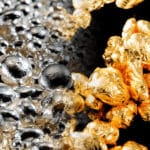 In the amalgamation process, the gold-bearing rock is also ground into fine sand. Mercury is then added to the rock dust. Gold has the property of bonding to the surface of mercury. Thus, mercury enriched with gold forms a shiny, silvery alloy solution, the so-called amalgam. This amalgam accumulates at the bottom of the vessel and is easily separated from the other minerals. The amalgam is then heated until the mercury evaporates, leaving pure raw gold. However, this method entails health and environmental hazards when the amalgam is heated. mercury vaporizationhighly toxic.
Gold extraction by cyanidation
The cyanidation process is mainly used where the earth has a high concentration of gold. Thecyanidation gold extraction technique involves leaching gold-bearing ore with a highly diluted cyanide solution.
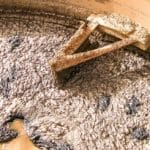 For this process, gold-bearing rock is ground into sand and dust. Subsequently, the rock dust - piled in heaps, columns or stored in tanks - is combined with a solution of sodium cyanide (sodium salt of hydrocyanic acid HCN). The acid loosens the gold from the rock dust and transports it into the acidic infiltration fluid in a chemically bound form. The gold is then filtered out of the leach solution by adding zinc dust, washed from the muddy substrate and finally dried. The recovered raw gold is then refined into fine gold. There are major reservations against this method of extraction due to the release of highly toxic and easily flammable hydrogen cyanide, which poses significant risks to humans and the environment.
Extracting gold with Borax
Theborax gold extraction technique is an environmentally-friendly, mercury-free method of gold extraction. Here, gold-bearing rock is placed in a melting crucible, then borax (sodium borate) is added. The borax lowers the melting point of the ore mixture, making the melt more fluid. The low melting point means thatgold canbe extracted using low-cost, low-power heat sources to induce fusion. Gold sinks to the bottom of the crucible, while other rocky materials such as silicon, quartz, ore or generally all oxides rise to the top.



You must be logged in to post a comment.