

Accueil » Achat & Vente Or » Informations sur l'Or »
What is gold made of?
Gold is the most precious of metals. In fact, pure gold possesses exceptional properties, making it unalterable and easily recyclable. Yellow gold is omnipresent and has accompanied mankind throughout its history. Man has used gold since antiquity to make coins, jewelry, artistic and religious objects, and even to decorate monuments. What are the particularities of the yellow metal? What is gold made of? This article is part of the information on gold that Abacor makes available to you.
Contact us :
01 48 04 76 06 Form Our counters >
The Chemical and Atomic Composition of Gold
Pure gold is a noble, malleable and highly ductile metal, the most ductile of all known metals, and both dense and soft. This face-centered cubic lattice crystal is a more or less brilliant yellow metal, which acquires great brilliance after polishing. The king of metals, yellow metal is also very resistant, as we shall see.
Chemical properties of gold
Gold is relatively chemically inert and very stable, as it does not oxidize in air or water under normal temperature and pressure conditions. Metallic gold does not tarnish or oxidize at any temperature. It also resists corrosion from the action of many chemicals and most acids such as hydrochloric, nitric and sulfuric acid. Like lead, it dissolves in mercury to form an amalgam, but does not react with this metal. As gold is insoluble in nitric acid, which dissolves silver and base metals, this property enables gold to be recognized, separated and purified.
Mechanical properties of gold
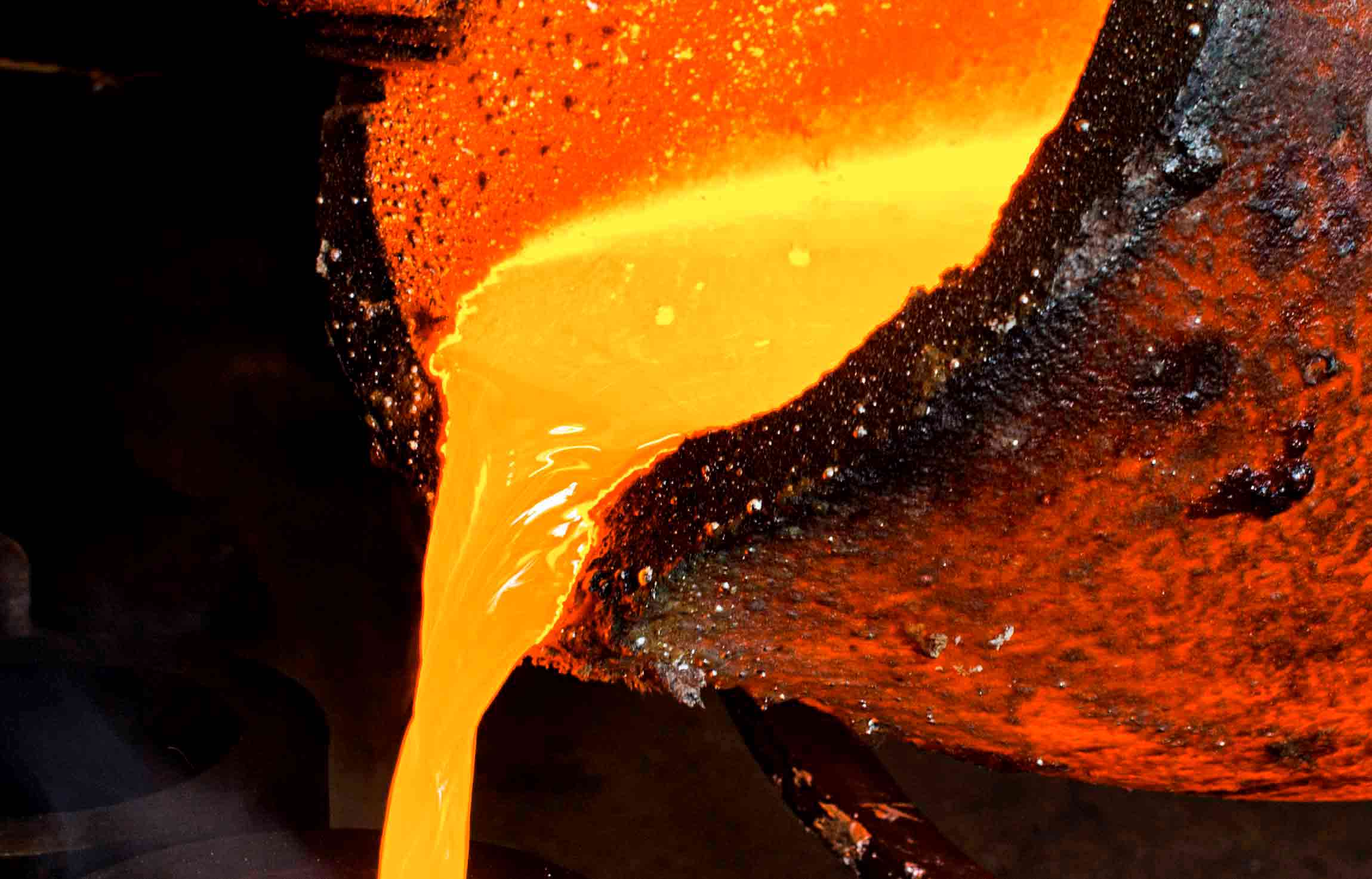
Molten Gold
Pure gold is a soft, malleable metal that deforms easily when cold and is easy to chisel. Very easy to work, it was used very early on to make jewelry and ornaments. The most ductile of metals can be presented in the form of thin gold leaf obtained by rolling (for plating objects) and in the form of gold wire, simple decorative textile thread or ultra-fine wire obtained by drawing. The melting point of gold is 1,064. 18°C. Gold is an excellent thermal and electrical conductor, the third most conductive metal (after silver and copper). Gold's specific gravity of 19.3 makes it the second densest metal (after platinum) among the main metals in use.
While most other pure metals are gray or silvery-white, gold has a metallic yellow color with complex reflections. In fact, when presented as gold leaf, a gold blade or leaf thin enough to be translucent shows a blue-green color through transparency.
Contact us :
01 48 04 76 06 Form Our counters >
The composition of gold by color
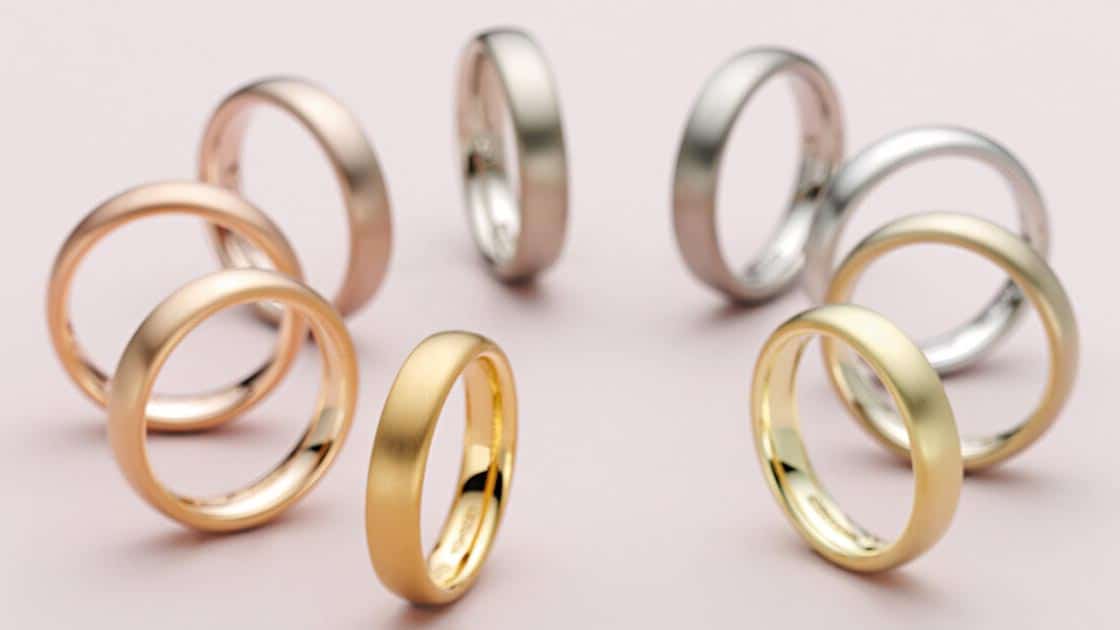
Colors of Gold
In its pure state or in the form of nuggets extracted from mines, gold has a yellow color. As pure gold is too soft and malleable, gold is mixed with other metals to increase hardness. This makes the jewelry stronger and more resistant to wear and scratches.
However, we can find different colors of gold. This is because the composition of the gold alloy can change the hue of the gold, depending on the proportion of different metals used. Goldsmiths therefore modify the quantity of metals other than gold in order to play with nuances. For example, colored alloys are composed of copper, which gives a red color, and silver, which lightens it.
Rhodium plating can be used to give rhodium-plated jewels an enhanced lustre.
Gold alloys can contain palladium and platinum, other precious metals used to a lesser extent, and nickel, whose use is now prohibited.
However, the composition of gold can vary according to the jeweler, his habits and the desired hue.
The Carat Composition of Gold
The carat of gold is a unit of measurement indicating the purity of solid gold for jewelry. The degree of purity is expressed in carats and the titration in thousandths. The gold carat therefore determines the quantity of pure gold in the composition of the gold.
The most common is 18-carat (75%), followed by 14-carat (58.3%) and then 9-carat (37.5%), which is used in jewelry. 24-carat gold exists only in the form of investment gold, gold coins and gold bars, but also for gilding. Here's the composition of gold by carat.
Composition of 18 Carats
- 18-carat yellow gold: 75% pure gold, 12.5% silver metal, 12.5% copper metal.
- 18-carat white gold (white gold): 75% fine gold, 20% copper, 5% palladium.
- For 18-carat rose gold: 75% pure gold, 20% copper, 5% silver.
Composition of 14 Carats
- 14-carat yellow gold: 58.5% pure gold, 11.5% to 25% silver, 11.5% to 23% copper and 2% to 7% zinc.
- 14-carat white gold: 58.5% fine gold, 17% silver, 17% copper and 7.5% zinc.
- 14-carat Rose Gold: 58.35% pure gold, 24.4% copper, 17.1% silver.
Composition of 9-carat gold
- 9-carat yellow gold: 37.5% fine gold, 12.1% silver, 44.4% copper and 6% zinc.
- 9-carat white gold: 37.5% pure gold and 62.5% silver.
- 9-carat Rose Gold: 37.5% fine gold, 42.5% copper, 20% silver.
Where to Buy Gold at the Best Price in Paris
Buy gold in Paris at the best price with Abacor, the French precious metals company. For over 22 years, Abacor has been offering professional gold buying services.
We welcome you to our branches to advise you on investing or to guide you in satisfying your desire to buy gold.
Our gold-buying experts offer free, no-obligation on-site gold valuations based on real-time gold prices. So you can be sure of buying your gold at the best possible price.
Free advice, free estimate, no obligation.



You must be logged in to post a comment.