

Corner axis of a coin
In numismatics, theaxis of a coin is the orientation of the corners in relation to each other. In other words, it's theorientation of the obverse design in relation to that of the reverse.
Cet axe est le plus souvent exprimé en heures. Sur un axe vertical, « douze heures » indique que le coin est orienté vers le haut de la pièce et « six heures », vers le bas. Selon l’orientation, à 6 heures ou à 12 heures, on parlera de « frappe monnaie » ou de « frappe médaille ».
Minting
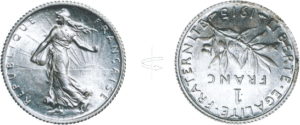
Minting
Une « frappe monnaie » correspond à une pièce dont les deux coins ne sont pas orientés dans le même sens. Ainsi, le haut d’un des coins est orienté à douze heures quand celui de l’autre coin est orienté à six heures. C’est généralement le cas au XIXème et XXème siècle.
Medal Strike
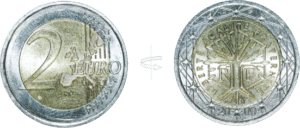
Medal Strike
Une « frappe médaille » désigne une monnaie dont l’orientation est à 12 heures. Ainsi, le haut des deux coins sont orientés dans le même sens.
How to obtain the corner axis
- To obtain the corner axis, hold the piece between thumb and forefinger, facing you, with the top of the motif at 12 o'clock.
- Then rotate the part by 180 degrees (on a vertical axis, like the movement of a router, for example), so that you can see the other pattern.
- If the top of the pattern you see now is at 6 o'clock, it's a coin strike. If the top of the pattern is at 12 o'clock, it's a medal strike.


You must be logged in to post a comment.