

Accueil » Bureau de Change » Devises de Change »
Euro - Europe - Euro banknotes
Euro zone countries
Euro features
See euro banknotes
European currency and Euro banknotes
Theeuro is the currency of the economic and monetary union formed within the European Union. It is common to the nineteen member states of the European Union, which together form the euro zone.
The euro symbol is € and its ISO code is EUR.
En usage sous sa forme scripturale le 1er janvier 1999, il est mis en circulation le 31 décembre 2001 à minuit sous sa forme fiduciaire c’est à dire de billets de banque en euros. Il succède à l’ECU, « l’unité de compte européenne » mise en service en 1979.
The euro is the world's second most traded currency, behind the US dollar and ahead of the Chinese yuan.
Since October 2006, the single currency has been the world's leading currency in terms of the number of banknotes in circulation.
Euro zone countries
Germany
Austria
Belgium
Cyprus (except Northern Cyprus)
Spain
Estonia
Finland
France (except New Caledonia, French Polynesia and Wallis and Futuna)
Greece
Ireland
Italy (except Campione d'Italia)
Latvia
Lithuania
Luxembourg
Malta
Netherlands (except Aruba, Curaçao, Saint-Martin and Caribbean Netherlands)
Portugal
Slovakia
Slovenia
Four micro-states (Andorra, Monaco, San Marino and the Vatican) are also authorized to use theeuro, as are two non-member European countries, Montenegro and Kosovo, which use it de facto.
Currency: Euro (EUR)
| Economic and Monetary Union of the European Union | |
| Currency | Euro |
| ISO code | EUR - Euro |
| Currency subdivision | 1 Euro = 100 centimes |
| Euro banknote denominations |
5, 10, 20, 50, 100, 200 and 500 Euros |
| Coins | 1, 2, 5, 10, 20, 50 Cent(s) and 1, 2 Euros |
| Currency import | Declaration for sums (cash or cheques), securities (shares, bonds, etc.) or valuables in an amount equal to or greater than 10,000 euros (or its foreign currency equivalent). |
| Currency export | Declaration for sums (cash or cheques), securities (shares, bonds, etc.) or valuables in an amount equal to or greater than 10,000 euros (or its foreign currency equivalent) |
| Exchange rates | Live exchange rates : 01 48 04 76 06 |
| Tickets in Progress | View euro currency bills on the European Central Bank website |
| Safety signs | Consult the security features of euro currency bills on the European Central Bank website. |
| Current Coins | View euro coins on the European Central Bank website |
Tickets in Euros
Il existe deux séries de billets en euros. Tous les billets ont cours légal dans l’ensemble de la zone euro.
La première série de billets, qui est entrée en circulation en 2002, est progressivement remplacée par la série « Europe ».
La nouvelle série de billets en euro nommée « Europe » a été introduite en 2013 avec la mise en circulation de la coupure de 5 euros. Elle a été complétée par l’émission des nouveaux billets de 100 et 200 euros fin mai 2019.
Il n’y a pas de dénomination de 500 euros de cette série, la BCE ayant totalement arrêté la fabrication et la distribution de cette grosse coupure pour enrailler les activités illégales.
Security features such as the hologram have been enhanced, and the face value printed with emerald green optically variable ink makes euro bills easier to recognize, making counterfeit bills easier to detect.
-

- 5 Euros ticket recto
-

- 5 Euros ticket back
-
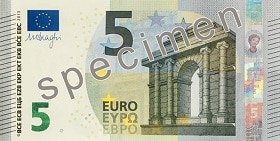
- 5 Euros Serie Europe 2019 ticket recto
-
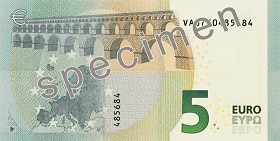
- 5 Euros Serie Europe 2019 ticket back
-

- 10 Euros ticket recto
-

- 10 Euros ticket back
-
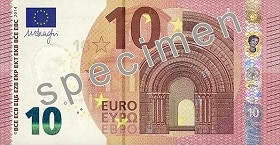
- 10 Euros Serie Europe 2019 ticket recto
-
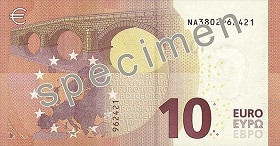
- 10 Euros Serie Europe 2019 ticket back
-

- 20 Euros single-sided ticket
-

- 20 Euros ticket back
-
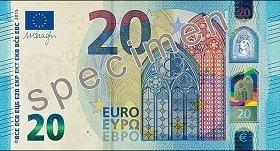
- 20 Euros Serie Europe 2019 ticket recto
-
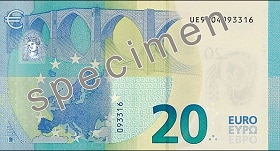
- 20 Euros Serie Europe 2019 ticket back

-

- 50 Euros ticket back
-
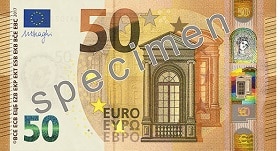
- 50 Euro bill Europe Series 2019 recto
-
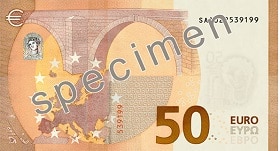
- 50 Euro bill Europe 2019 series back
-

- 100 Euro bill, recto
-

- 100 Euros bill back
-
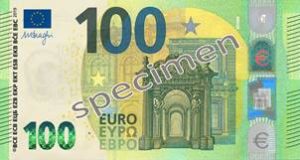
- 100 Euro bill Europe Series 2019
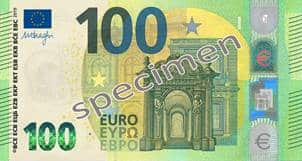
-
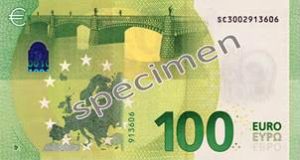
- 100 Euro bill Europe Series 2019
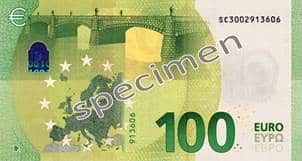
-

- 200 Euros single-sided ticket
-
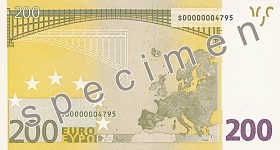
- 200 Euros ticket back
-
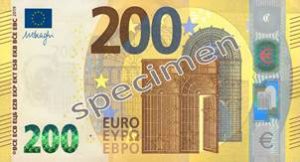
- 200 Euros Europe Series 2019 ticket
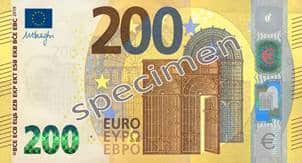
-
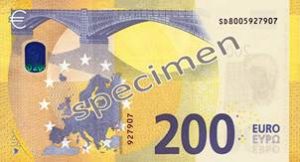
- 200 Euros Europe Series 2019 ticket
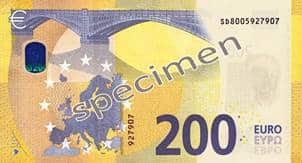
-

- 500 Euros bill recto
-
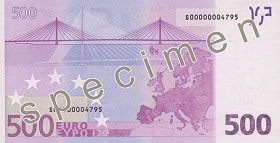
- 500 Euros bill back
Banks and Euro banknotes
The production of euro banknotes is a joint effort by the national central banks and the ECB. For example, the Banque de France manages the production and distribution of euro banknotes in France.

You must be logged in to post a comment.